
//CAPE ISLAND garden//
an oasis for wildlife

More plantings coming spring 2026
This naturalistic garden is situated just north of Cape Island Creek. On the wetlands’ edge and a short distance from the Atlantic ocean, Plant Friends reimagined this home garden with cues from the wild landscape next door and the family that spends their summers here. What is unfolding is an ecologically significant garden that honors the fosters biodiversity and serves to connect people to this special place and its flora and fauna.
This garden is comprised almost entirely of plants native to the Cape May Peninsula with a few exceptions to include beloved local and family favorites. Native plants are uniquely adapted to serve the needs of local wildlife from Monarch butterflies to native bees and nesting birds.
Learn more about the garden below, and see spotlights of ecologically important and beautiful native species ready to make themselves at home in your Cape May Garden.
-
Beach Plum trees, Adam’s Needle (Yucca), Seaside Goldenrod, Spotted Beebalm, Shining Sumac, Northern Bayberry, three Milkweed species and many other plants native to Cape May grace this garden.
Not only do these plants celebrate Cape May’s unique character, they are adapted to the local sandy soils, tolerant of soil salinity, and - best of all - have myriad intricate relationships with local wildlife. Cape May is famous for its bird life, and native plants provide the food and habitat they need to thrive.
-
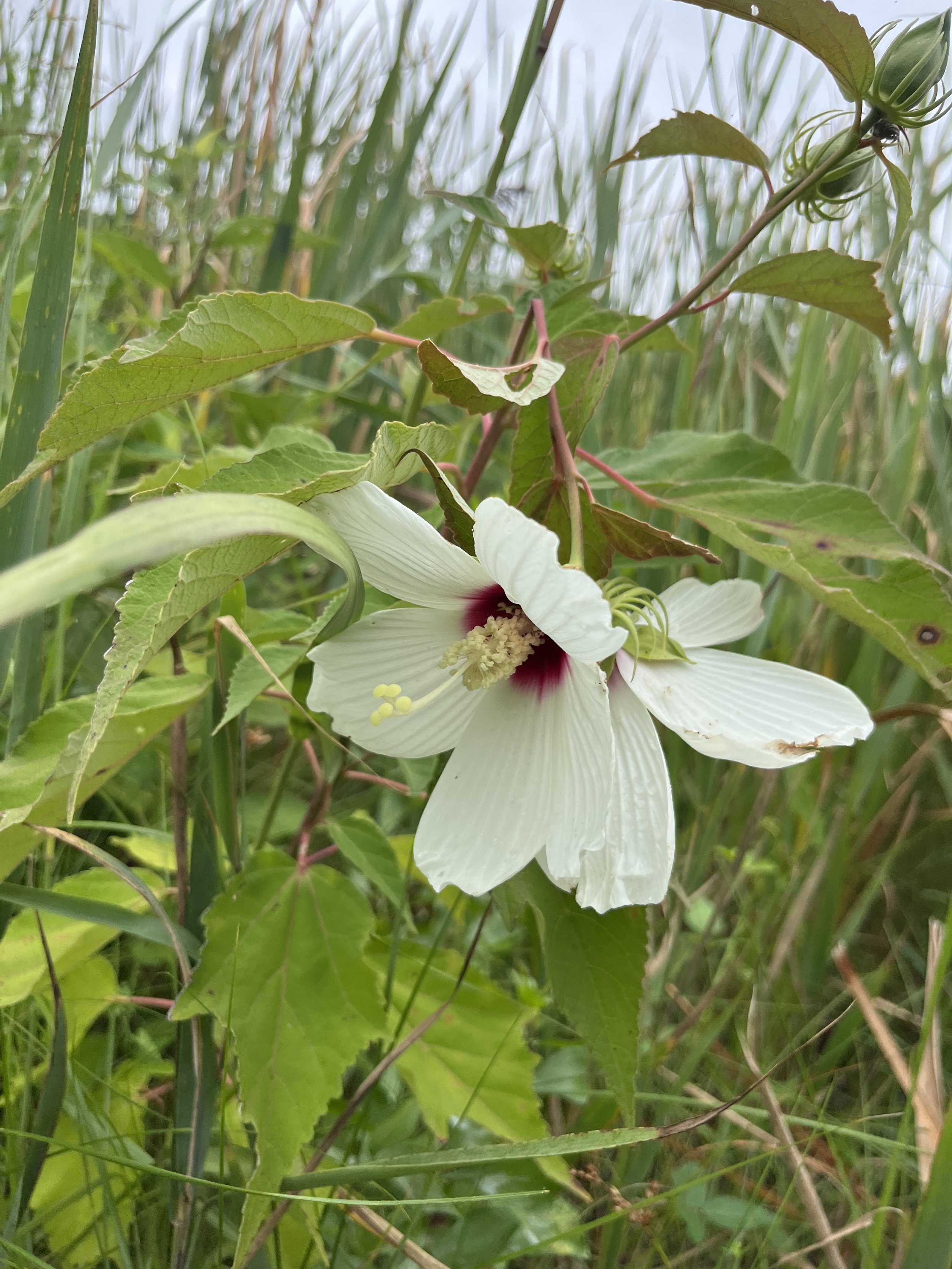
The rain garden at the southeast corner of the garden accepts rain from the roof, allowing rain from two gutters on the southeast of the house to percolate more slowly into the ground. This in turn protects the creekside from erosion. It’s also an opportunity to plant more water-loving plants such as Rose Mallow Hibuscus.
-
The Cape May Peninsula is a water-rich extension of the New Jersey coastal plains between the Delaware Bay and the Atlantic Ocean. Characterized by coastal wetlands–saltwater, brackish and freshwater marshes, and tidal creeks–this biodiverse landscape holds global significance as a refuge for migratory birds and other wildlife.
This mostly native garden is inspired by plants from the mid-Atlantic coastal plain and in most cases to Cape May County in particular. In addition to being uniquely adapted to local soils and weather, native plants are the foundation of our food web.
While many plants are marketed as pollinator plants, the reality is native plants are what truly provides for pollinators and wildlife- not just offering nectar but habitat and food to complete their entire life cycle. Local plant communities have complex relationships that balance competition and collaboration, which leads to far greater biodiversity. It’s our native plant communities that provide the basis of the food web and are some of our greatest allies in stemming the tide of extinctions and habitat loss.
-
This garden was designed by Rose Fairley of Plant Friends.
Special thanks to Jenn, Pasquale, Pedro, Willfredo, Alfonso & Luis from Fine Garden Creations for installing this garden; the team at Bayshore Landscaping for their work preparing the site for planting; Michael, Devon & Ani of Michael Shannon Designs for their gorgeous garden furniture selections and curatorial insight; George Davis of Hawthorne-Davis for leading the beautiful build and providing and architect Ed Barnhardt for his masterful reimagining of this home in a way that fully embraces the beauty of this place.
Finally, thanks to the family who inspired this garden for taking the leap with this naturalistic design and leaning into their enthusiastic love of Cape May’s native flora and fauna.
native plants for your cape may garden
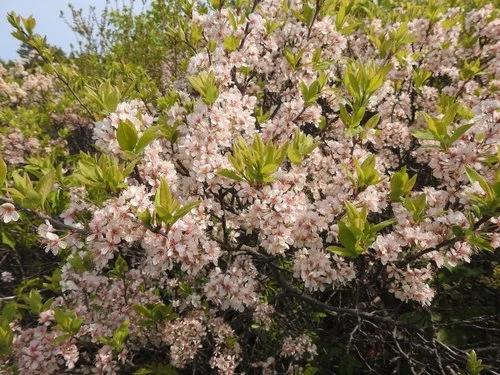
Beach Plum, Prunus maritima
The locally famous beach plum tree, Prunus maritima, not only has beautiful spring flowers, flavorful late summer fruit and vibrant fall color, but is a keystone species. That means beach plums have an outsize positive impact on the local ecosystem. In fact, plants in the Prunus genus support over 400 species of moths and butterflies (Native Plant Trust). That’s good news for Carolina Chickadees, who need nearly 10,000 caterpillars to raise just one clutch (and chickadees are small birds!)
Most songbirds rely heavily on caterpillars to feed their young, and non-native plants often represent a food desert for many moth and butterfly species whose caterpillars are not adapted to eat these newcomers. More native plants (particularly keystone native plants) = more birds reproducing in a given place! With many common bird species in precipitous decline, one of the best things locals can do to support Cape May’s famous bird population is integrate native plants into our home landscapes.
To inquire about Plant Friends native design services, contact Rose at rose.plantfriends@gmail.com
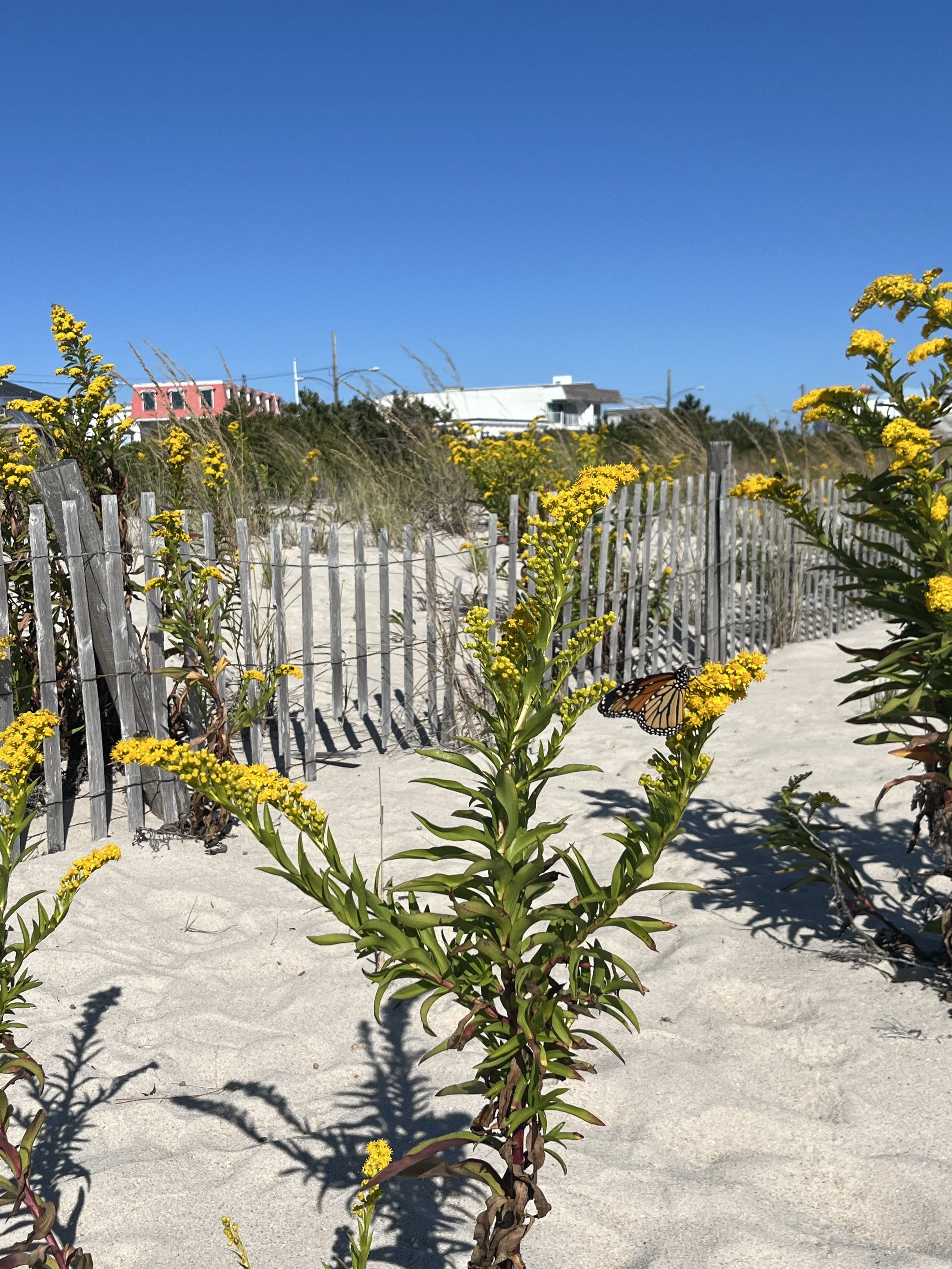
Seaside goldenrod, Solidago sempervirens
A handsome goldenrod with succulent foliage that brightens the garden in autumn with plumes of gold. If you’ve ever walked alongside the dunes in fall, you’ve seen this plant in full glory! Look a little closely and you’ll see bees of all shapes and sizes visiting the flowers as well as Monarchs and other butterfly species nectaring. This plant will self-sow and spread itself around but isn’t hard to remove if it shows up somewhere you’re less keen to keep it- a great ally in filling in spaces in garden beds and an important source of fall color in the garden and nectar for insects when other flowering plants have already gone to seed!
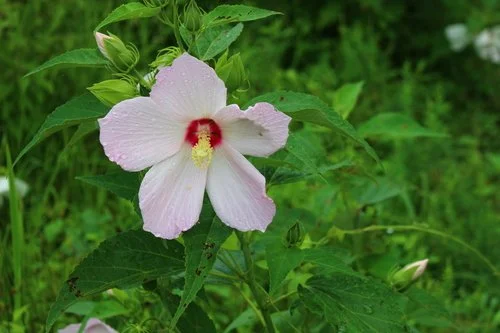
Rose Mallow, Hibiscus moscheutos
Rose Mallow Hibiscus has showy white or occasionally pink crinkled petals and dark pink centers that guide floral visitors to nectar. This is a perfect plant for a sunny but wet spot in your landscape. If you have an air conditioning unit, consider planting where condensation drips lead to a locally wet spot near the house.
For the Rose-mallow bee, Ptilothrix bombiformis, these flowers are critical to their survival as a species. Unlike the non-native honey bee, the Rose-mallow bee has a specialized diet - feeding its young exclusively Hibiscus pollen. Females lay eggs in the ground with a provision of Rose Mallow pollen for when they hatch, and their entire life cycle from emergence to mating is synced up to the bloom time of this plant.
Bees are yet another reason native plants are important to biodiversity. “New Jersey is home to approximately 350 species of native pollinating bees.” While some of them are generalists, relying on many different flowering plants (like bumblenees), some species are specialists visiting only a single species or genus of plants in a species to gather nectar and pollen. When native plants are removed for development or edged out by invasive species, specialist bee decline and can even go extinct or locally extinct. Planting native plants in our home landscapes - once wild - can provide a vital refuge for these small but important species.
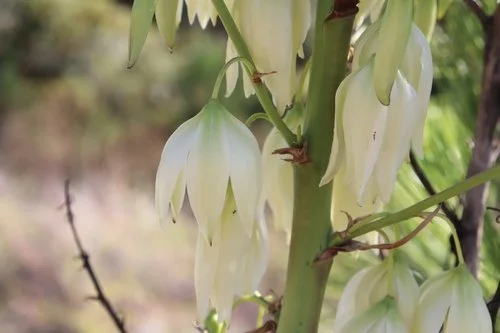
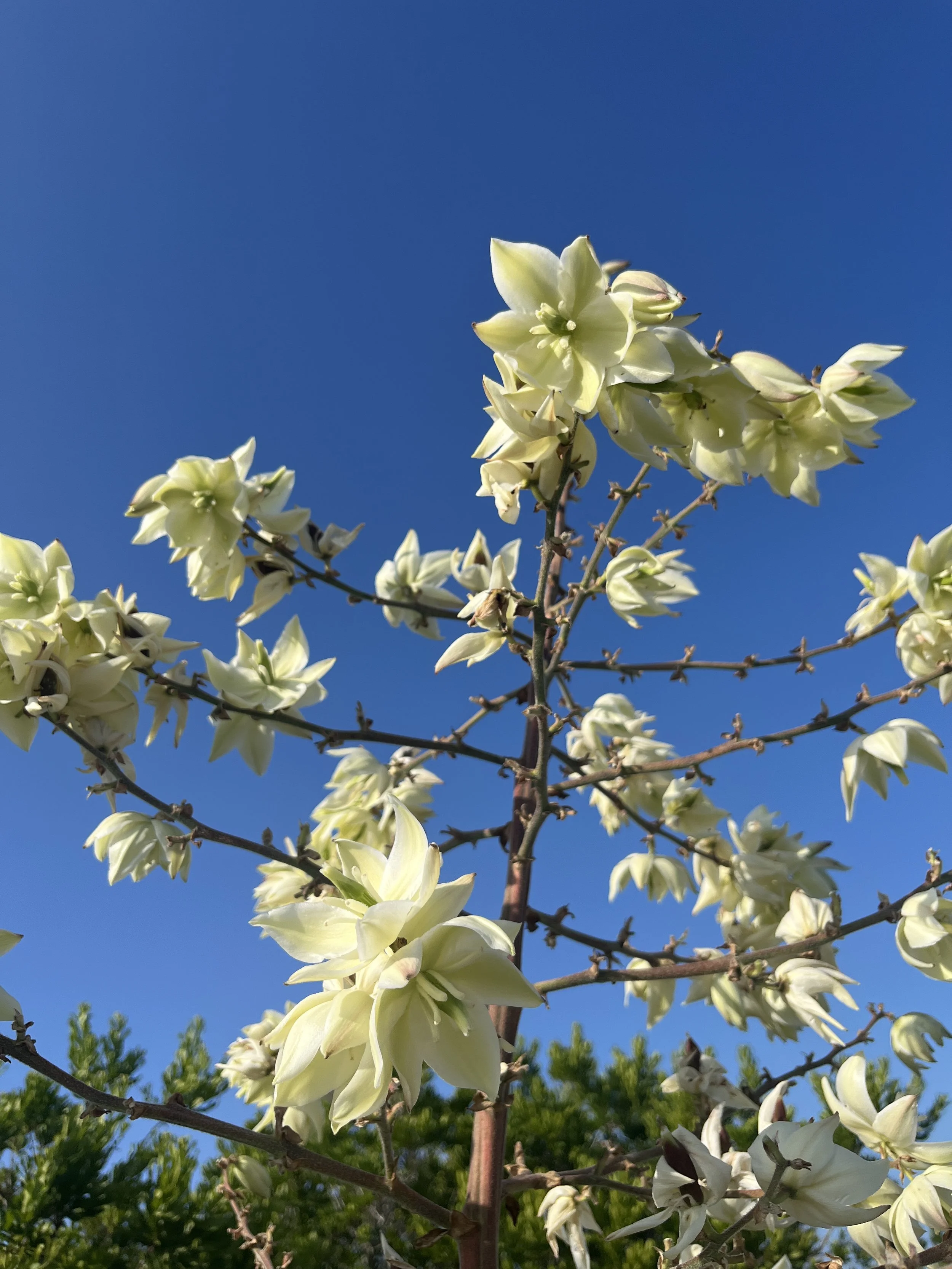
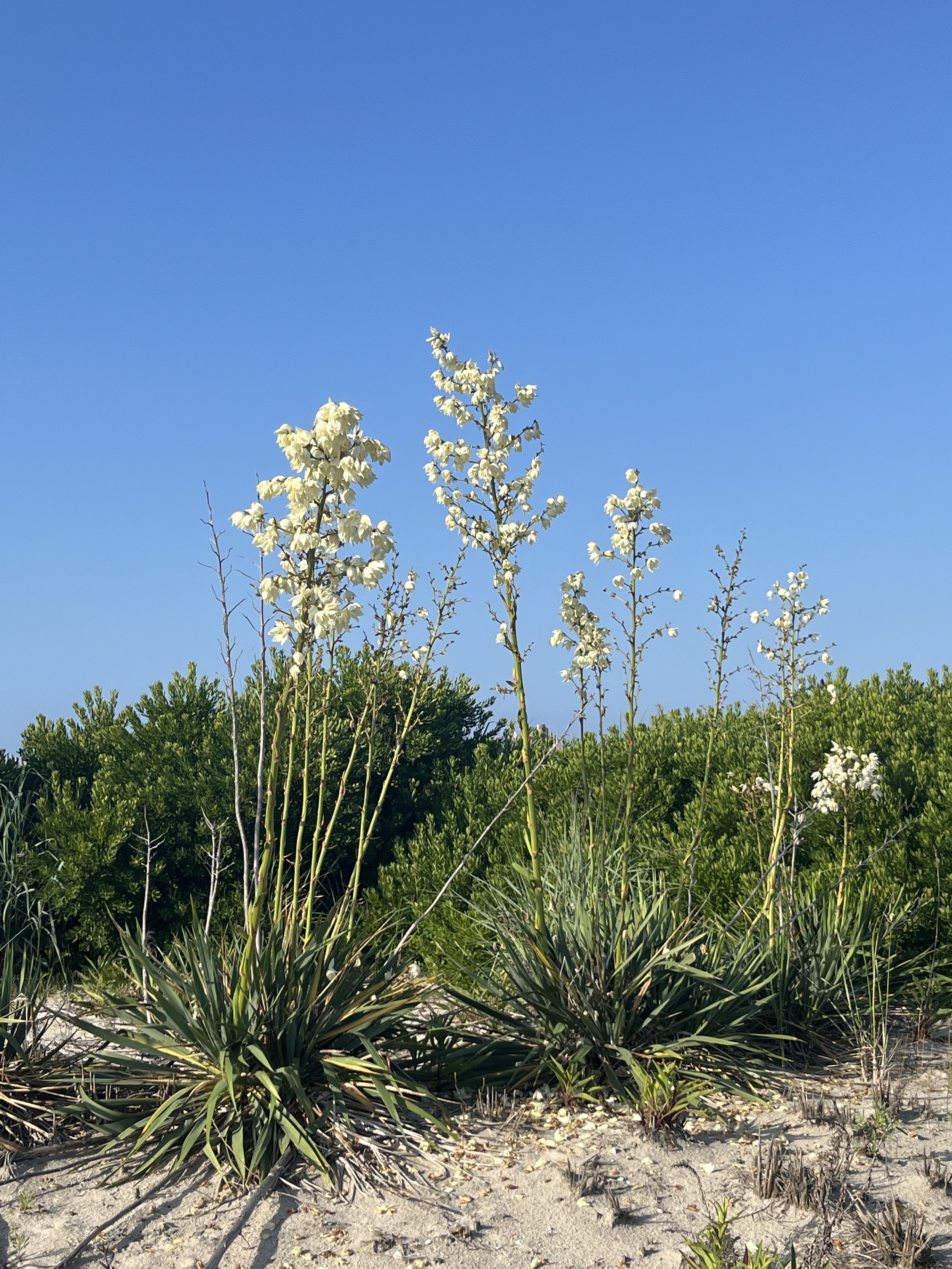
Adam’s Needle, yucca filamentosa
Many coastal residents have already embraced this wonderful plant in their gardens. Their showy cream colored inflorescences delight mid-summer, followed by statuesque seedpods. Leave the seed pods in place to support the life cycle of the Yucca Moth.
Yucca Moths have a special relationship with the Yucca plant. The moth is the sole pollinator of the yucca plant, and the yucca seeds are the sole food of the yucca moth larvae - they are entirely indebted to one another for survival. The yucca moth intentionally pollinates several yucca plants before finding finding a suitable plant where she lays her eggs in developing seedpods. When the larvae emerge they eat the. Some seeds are lost to this predation, but others develop to maturity.
Northern bayberry/
Northern wax myrtle, morella pensylvanica
With fragrant green leaves and abundant waxy berries, Northern Bayberry makes a handsome shrub in the landscape. It’s also an important source of food when food is scarce particularly for yellow rumped warblers. In fact, yellow rumped warblers once bore the name myrtle warblers after their prolific consumption of the bayberry fruit.
A nitrogen-fixing shrub, the roots of the Northern Bayberry contain nodules that host bacteria that convert nitrogen - an important nutrient for plant growth - into a form that plants can use providing a service that reaps benefits not only for other plants but for animals that rely on plants as a source food. While nitrogen is abundant in the atmosphere, it’s in a form that’s unusable making this plant-bacteria partnership vital for a healthy ecosystem to function.
post oak, Quercus stellata
If you’re looking for a shade tree that won’t overwhelm a smaller yard, consider post oak which grows to a mature height of 40-50 ft.. Post oak is extremely drought tolerant once established, growing where wet Springs fade to dry summers. It has vibrant red fall foliage and tolerates salt! Oaks are often the most powerful species wherever they are native with the supporting over 500 species of Moths and Butterflies. Caterpillars eat the leaves (but don’t damage the trees) and provide forage for nesting birds and other wildlife. The canopy is important habitat, leaf litter builds the soil and shelters creatures through the winter (such as firefly larvae!) and
Other native oaks to consider - Southern Red Oak, Willow Oak
every inch of ground
has a profound role
to play IN support
OF a thriving planet
Whether the land you tend to is a patio or several acres, together we can help support native pollinators and find joy in our connection with/as nature in our gardens.
“...even the tiniest backyard or balcony can be a stopover for those smallest of animals upon whom we all depend.”
- The Xerces Society for Invertebrate Conservation
Plant Friends offers design services in regions where we have relationship with wild plant communities, including Southern Appalachia and the Piedmont regions of the Southeast, the Mid-Atlantic, New England and Southern California.
TANGIBLe, MEANINGFUL & JOYFULL–IN SUPPORT OF BIODIVERSITY
Native gardens not only deepen our connection with home by inviting in the wider web of life but very practically help to stem the tide of species extinctions by fostering biodiverse communities.
In place of ecologically impoverished lawns, sterile xeriscapes or stale ornamentals, native gardens return the symphony of life back to human dwellings and gathering spaces.
These gardens are part of a path to re-finding a positive ecological role for all of us. We also happen to think they are the most beautiful, and are confident we select native plants that are both ecologically powerful and stunning!

// How We Design //
Ecology. Every design begins with site-specific ecosystem research. Which keystone species will anchor this garden and provide an outsize benefit to local wildlife? What plant communities were present on this site prior to building? We’ll take the time to get to know the many lives that will benefit from this garden.
Current conditions. We take in the existing conditions of the site from the light to the composition of the soil to details such as the extra moisture from an air conditioner or downspout, and find opportunities in all these. In a recent garden we were able to install a rain barrel to catch condensation from coastal fog that drips
Community. We are part of the ecosystem too. Facilitating relationships between people, plants and critters inspired the foundations of plant friends, and is core to our design process. In many ways we consider this a match-making process between people and plants. We want you to fall in love! We choose from native plants that will engage you specifically and have designed gardens with home chefs, floral designers, and children especially in mind.
// OUR TOOLS //
We use AUTOCAD to provide scaled drawings that smoothly facilitate installation. Hand drawing is also foundational to our design process, and helps us build intimate relationship with the space and interactions among plantings.
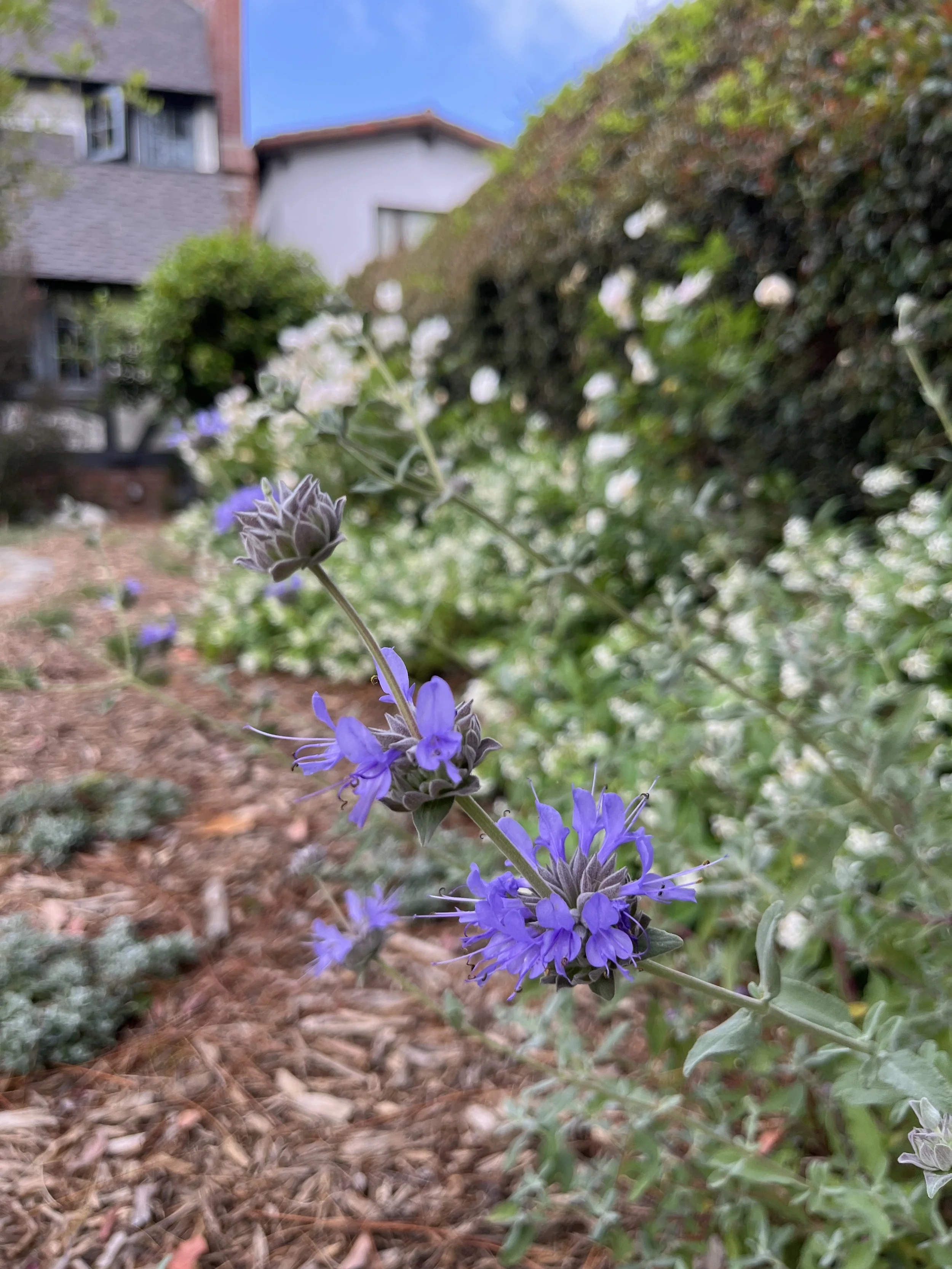
GALLERY OF WORK - CALIFORnIA




What People Are Saying
It was such a joy to work with Rose on a native garden design for my backyard! She has such deep knowledge, yet made this whole process straight forward and clear to me, someone who is very much a beginner learner. The customized design we received is absolutely remarkable and has so much information and resources included. I absolutely cannot wait to make my yard a pollinator paradise.
Rose is warm, friendly, professional, and her love and passion for native plants and healthy ecosystems is contagious. I feel so inspired and ready to transform my backyard!
— Kelly P. , WESTCHESTER COUNTY, New York

“Your work adds joy every single day for us!!”
— Jessie n. , LOS ANGELES, California
TELL ME ABOUT
YOUR VISION
I look forward to hearing what’s important to you, and offering guidance to create beauty and habitat.
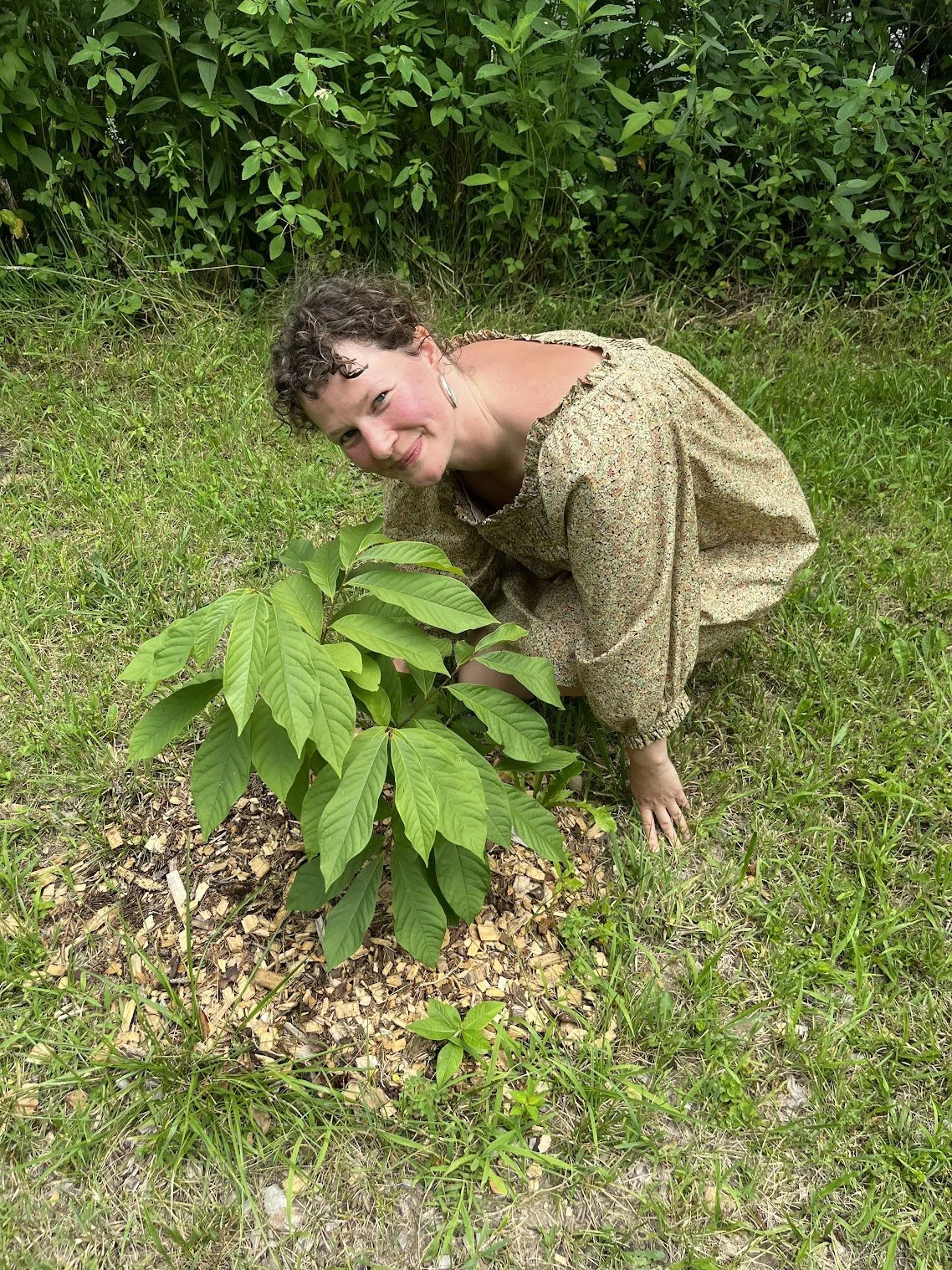
Landscape designer Rose Fairley grew up in Swarthmore, Pennsylvania. She began working with native plants in Western North Carolina, where she studied plant communities with naturalist Luke Cannon. She is a Certified California Naturalist (UC-ANR) and Native Plant Landscaper (Theodore Payne, California Native Plant Society). Now splitting her time between both coasts, Rose has been gardening with native and edible plants for nearly a decade, and combines the practical experience of a gardener with a commitment to creating beautiful and wildlife-supportive gardens that brings joy to clients through interspecies connection!